Choosing a school
Monaco runs on two distinct tracks. Public schools, free for residents, follow the French national curriculum, taught in French, with bilingual classes from kindergarten onward. They cover the full path, from École de Fontvieille or École de la Condamine through to Lycée Albert Ier, which even offers a preparatory literary class. Enrolment requires the child's and parents' residence cards, vaccination records, and proof of address in Monaco.
For families who prefer an English-language track, the International School of Monaco (ISM) remains the main reference: bilingual English/French teaching, the International Baccalaureate programme from kindergarten to graduation, and accreditation by the Council of International Schools. Tuition ranges from €18,000 to €28,000 a year depending on the grade, and admission is based on academic records, a language assessment, and a family interview. Places are limited, so it is worth starting the process several months ahead of the intended start date.
Between these two options, private schools under contract with the state, such as the Institut François d'Assise-Nicolas Barré, offer a third path, with moderate fees and strong results at the baccalaureate.
Healthcare
Children's healthcare in Monaco relies on a remarkably dense system for such a small territory. The Centre Hospitalier Princesse Grace covers nearly the full range of medical and surgical specialties, with quick access to the CHU in Nice for highly specialised care. Salaried residents and their dependants, including children under 18, are covered by the Caisse de Compensation des Services Sociaux (CCSS), Monaco's equivalent of social security, which reimburses consultations, treatment and hospital stays at rates generally more favourable than in France.
Families who do not fall under the CCSS, typically when the parents do not work in Monaco, need to take out private health insurance. This coverage is in fact a required part of the residency file, to be renewed every year. Many international families add a supplementary policy with international coverage, useful for regular travel between Monaco, London, Geneva or Paris.
Daily life with children
Beyond school and healthcare, it is everyday life that weighs most heavily in a family's decision to settle in Monaco. The Principality combines an unusual level of safety, short distances between home, school and activities, and direct access to the sea and sports facilities. The Centre de Loisirs Prince Albert II welcomes children aged 3 to 12 enrolled in Monaco schools during the holidays, a solution valued by working parents.
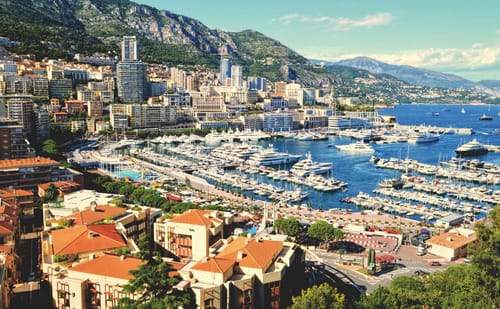
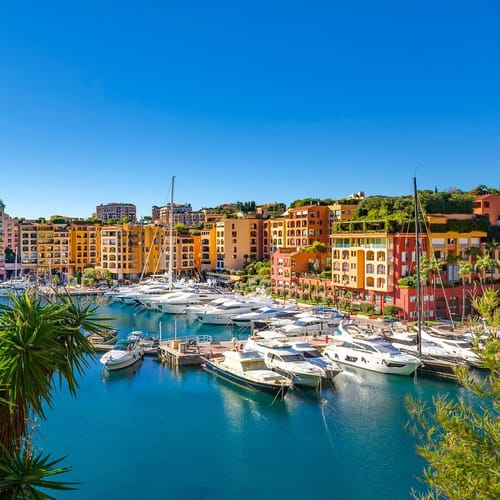
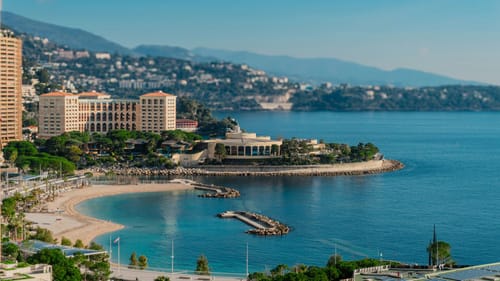
The choice of neighbourhood plays a very concrete role here: proximity to a school, a park or a beach genuinely changes how a family organises its routine, far more than it would over a larger territory. Fontvieille, with its park and sports facilities, or Larvotto, close to the beaches, are often sought after for this reason.
How we help
Choosing a property for a family is never just about square metres or bedroom count. Proximity to schools, to the CHPG, or to green spaces is one of the criteria we factor in from our first conversation with you. Looking for a property suited to family life in Monaco? Let's talk about your project.